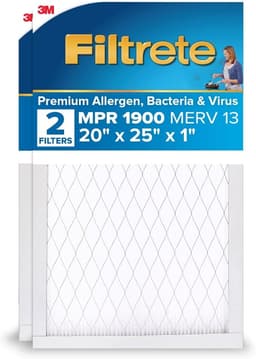
Filtrete MPR 1900 Ultimate Allergen
MERV 13Filtrete (3M)
~$70/4-pack4-pack
Highest-rated 1-inch Filtrete. Strongest smoke and fine particle capture available.
Check Price on Amazon →The EPA recommends MERV 13 or higher for filtering wildfire smoke. Smoke particles (PM2.5) are small enough to pass through MERV 8 and MERV 11 filters, making a MERV 13 upgrade essential during fire season. Our top picks: the Filtrete MPR 1900 (~$70/4-pack) for maximum particle capture, and the Nordic Pure MERV 13 + Carbon (~$55/6-pack) if you also want smoke odor removal. Stock up before fire season starts. Filters sell out fast when air quality drops.
Preparation is the single most important thing you can do. Filters sell out quickly once smoke arrives, and upgrading during an active event means breathing poor air while you wait for delivery.
Upgrade to MERV 13
Replace your current filter with a MERV 13 rated filter before smoke season begins. This is the EPA-recommended minimum for wildfire smoke.
Check HVAC compatibility
Verify your HVAC system can handle MERV 13. Check the owner's manual for the maximum MERV rating. Most systems built after 2000 handle MERV 13 fine.
Stock up on replacements
Buy at least 2 to 3 extra filters. During active smoke events you will burn through filters every 30 to 45 days. Having spares means you won't wait for shipping during poor air quality.
Seal air leaks
Check windows, doors, and ductwork for gaps. Sealing leaks forces more air through your filter instead of letting unfiltered smoke seep in around edges.
When the AQI climbs above 100, your air filter becomes the primary defense for indoor air quality. These steps keep it working at peak performance.
Replace every 30 to 45 days
Heavy smoke loads clog filters far faster than normal dust. Check your filter weekly. If it looks dark gray or brown, replace it immediately.
Run your HVAC fan continuously
Set the fan to "ON" instead of "AUTO." This keeps air circulating through your filter even when heating or cooling isn't active, providing continuous filtration.
Seal windows and doors
Keep all windows and exterior doors closed. Use towels or draft stoppers under doors if needed. Every gap lets unfiltered smoke bypass your HVAC system.
Filtrete (3M)
Highest-rated 1-inch Filtrete. Strongest smoke and fine particle capture available.
Check Price on Amazon →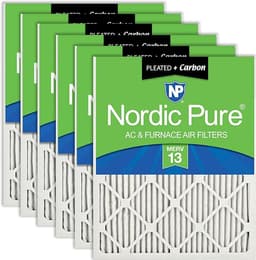
Nordic Pure
MERV 13 particle capture plus activated carbon for smoke and odor removal.
Check Price on Amazon →Once air quality returns to normal (AQI consistently below 50), take these steps to restore your HVAC system and indoor air quality.
Set a replacement reminder
Get a reminder in 90 days with a direct link to reorder.
Set a reminder for early June to upgrade your filter before peak wildfire season. Having your MERV 13 filter installed and spares on hand puts you ahead of most homeowners.
MERV 13 is the minimum recommended by the EPA for filtering wildfire smoke particles. Wildfire smoke contains fine particulate matter (PM2.5) that MERV 8 and MERV 11 filters cannot capture effectively. MERV 13 filters trap particles down to 0.3 microns, which covers the most dangerous smoke particles.
Every 30 to 45 days during active smoke events. Heavy smoke loads clog filters much faster than normal household dust. Check your filter weekly during poor air quality days. If it looks dark gray or brown, replace it immediately regardless of how long it has been installed.
Most HVAC systems built after 2000 can handle MERV 13 filters without issues. MERV 13 does create more airflow resistance than lower ratings, so check your system manual for the maximum MERV rating. If your system is older or has a weak blower motor, a MERV 12 filter like the Filtrete MPR 1500 is a good compromise.
Carbon helps with smoke odor but is not required for particle filtration. If you can smell smoke inside your home, a MERV 13 filter with activated carbon (like the Nordic Pure MERV 13 + Carbon) addresses both the particles and the smell. If odor is not a concern, a standard MERV 13 filter works fine for particle capture.
Replace your wildfire-grade filter once air quality returns to normal (AQI below 50 for several consecutive days). Install a fresh filter at your usual MERV rating. The filter you used during smoke events will be heavily loaded and should not be reused, even if it was only installed for a few weeks.